
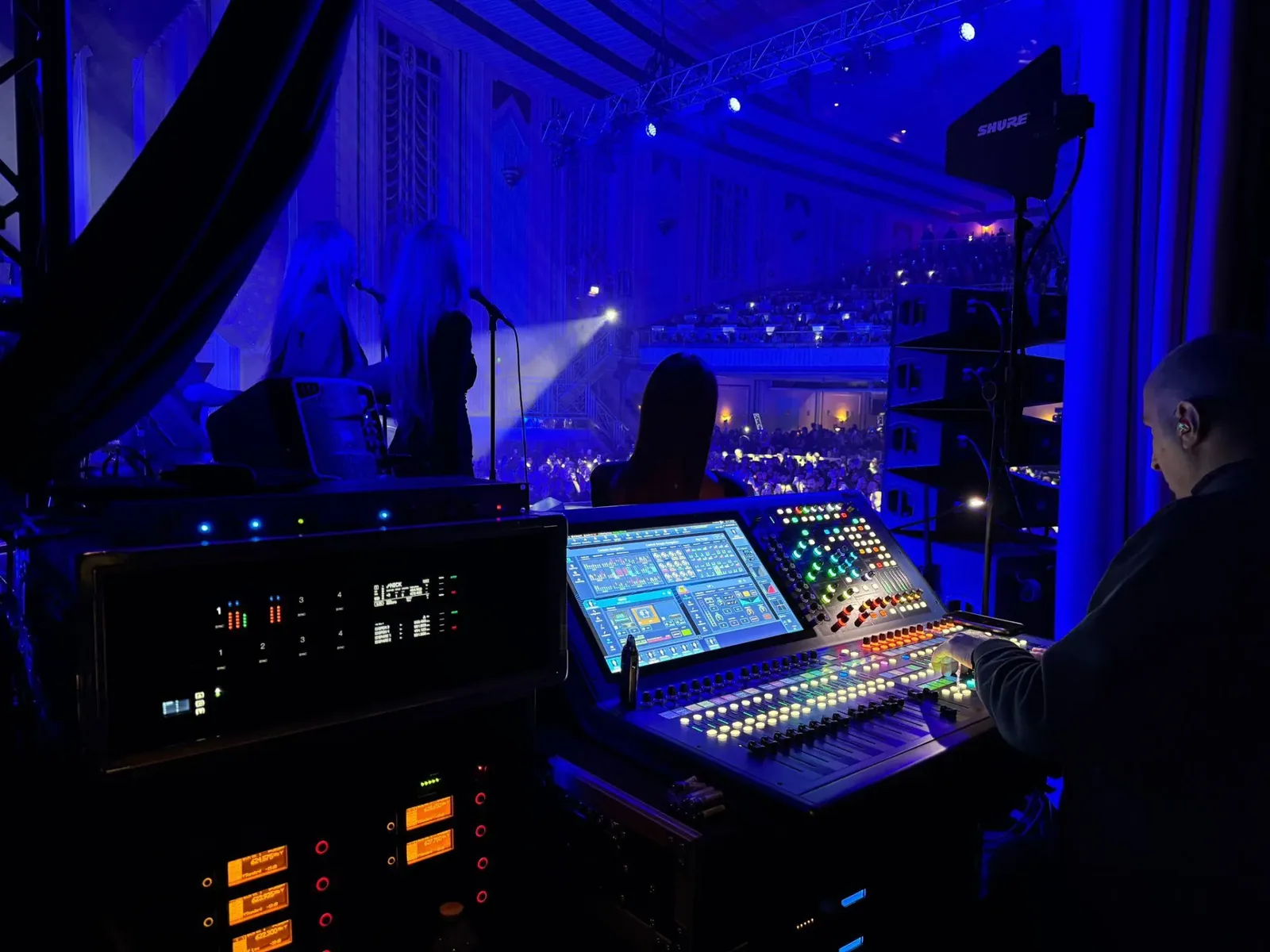
Short answer: usually, yes. Most professional radio mics and in-ear monitors in the UK work in frequencies that need a licence from Ofcom. A few channels are licence free, but they come with limits. Here's how it works, in plain English.
Three ways to use radio mics legally
1. Licence-free channels. Ofcom sets aside a small slice of spectrum that anyone can use without a licence: 863.1 to 864.9 MHz (known as Channel 70) on UHF, and 173.7 to 175.1 MHz on VHF. The catch is low power (10mW for handhelds and 50mW for body packs on Channel 70), room for only a handful of mics, and no protection from anyone else using the same frequencies. Fine for a couple of mics in a small room. Not something we'd rely on for a keynote.
2. The UK Wireless Microphone Licence. This is a shared licence that covers Channel 38 (606.5 to 613.5 MHz) and lets you use those frequencies anywhere in the UK. It lasts one or two years and, at the time of writing, costs £75 for a year if you buy it online. It's shared, so other licence holders can be on the same frequencies, and nobody gets priority.
3. A coordinated licence. For anything that can't fail, Ofcom assigns specific frequencies for your venue and dates, and manages them so nobody else is put on top of you. This is what we use for stadiums, conferences with lots of mics, and anywhere with broadcast or other crews on site. The cost depends on how many frequencies you need and for how long.
Big events have their own rules
Some events, like Royal Ascot and Reading and Leeds festivals, are named by Ofcom as major events. Frequencies on site are tightly controlled, and there's an application deadline weeks before the event. If you're supplying or performing at one of these, check the deadline early.
What this means for your event
- Count everything that transmits. Handheld mics, headsets, lavaliers, in-ear monitors and comms all need frequencies.
- Know the venue. City centres and stadiums are busy. A frequency that's clear in a village hall may be unusable in central London.
- Ask your supplier what's covered. If you're hiring radio mics, ask who sorts the licence and the frequency plan. It shouldn't be left to chance on the day.
How we handle it
When you hire radio mics from us with one of our engineers, we plan the frequencies for your venue and sort the right licence, so you can concentrate on the event. If you're hiring kit on its own, we'll tell you exactly what licence it needs.
Rules and fees change, so check Ofcom's PMSE pages before you rely on any figures here. Correct as of November 2026.
Not sure what you need? Get in touch and we'll talk you through it.